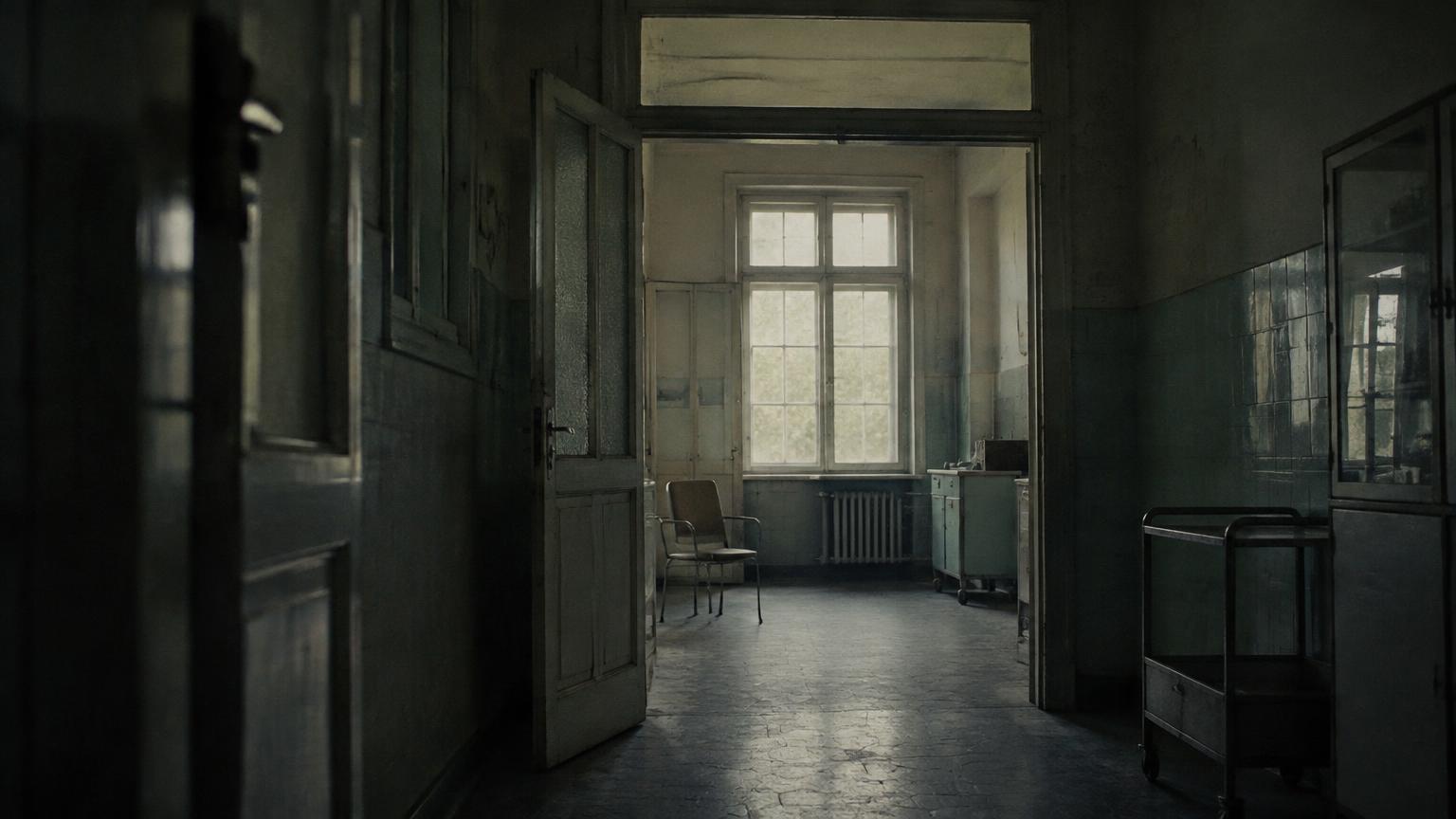
Peak in Darien: Deathbed Visions of People Not Known to Be Dead
The one class of end-of-life vision that expectation cannot easily explain
Published 9/17/2026 · Last revised 9/22/2026
Researched and written by Jamie Stas, independent researcher and author · Last reviewed 22 September 2026
Dying patients commonly report seeing deceased relatives. In a small subset, the person seen had died recently and the patient had not been told. These are called Peak in Darien cases, and they are the only deathbed-vision reports with a testable component.
Introduction
Deathbed visions are usually dismissed, reasonably, as the expected product of a failing brain and a grieving mind: people see who they expect to see. The Peak in Darien subset inverts that. The patient sees someone they believe to be alive — and who has, unknown to them, recently died.
Why the subset matters
An ordinary deathbed vision is unfalsifiable. A Peak in Darien case has a fact in it that can, in principle, be checked against records: did the patient have access to the information?
The term comes from Frances Power Cobbe in 1877, borrowing Keats'' image of explorers reaching a summit and seeing an unexpected ocean.
The evidential requirements
For a case to count as anything more than a story, every one of these must hold:
- The vision was recorded or witnessed before the news of the death reached the patient''s ward.
- The death occurred close enough in time to exclude coincidence.
- Staff and family are independently interviewed about information control.
- The patient''s cognitive state at the time is documented.
Almost no historical case satisfies all four. Karlis Osis and Erlendur Haraldsson''s 1961–1973 surveys of American and Indian physicians and nurses collected thousands of deathbed observations; the subset with contemporaneous documentation of information control is small.
Cultural cross-check
Osis and Haraldsson''s Indian data is the most interesting control in the literature. If visions were purely culturally scripted expectation, the figures seen should differ sharply by religion — and in content they do. But the structural features (the figure comes to take the patient away; the patient''s mood lifts) were similar across two very different cultures, which cuts against a purely expectation-driven account while proving nothing about ontology.
Where this investigation currently stands
We are collecting cases that meet criteria 1 to 4 above, with documentary evidence, and rejecting the rest. Most submissions we receive fail criterion 1, usually because nobody wrote anything down at the time.
::: callout This dossier is deliberately incomplete. We would rather publish a short list of well-documented cases than a long list of moving ones. :::
The unexplained core
What remains after every prosaic explanation we could test.
A small number of cases exist in which a dying patient described seeing a specific person, the person had died shortly before, and the record suggests the patient had not been informed. Where the documentation is contemporaneous, no ordinary explanation is obvious. Where it is retrospective — which is most of the time — the case proves nothing. We do not claim these cases demonstrate survival of consciousness.
Conclusion
Peak in Darien cases are the strongest available form of a very weak evidence class. The honest position is that the reporting is real and the documentation is almost always too late. We are treating this as an open collection project rather than a finished argument.
Linked case records
Individual incidents inside this investigation. Expand a record for witnesses, evidence types and the competing explanations.
Sources & citations
- [1]Secondary
At the Hour of Death
Karlis Osis and Erlendur Haraldsson · Avon Books · 1977
The similarities across two cultures were greater than the differences in the structure of the experience.
Survey data.
- [2]Archival
The Peak in Darien: A Lecture
Frances Power Cobbe · Williams and Norgate · 1882
She saw, as she believed, one who was still living among the dead.
Origin of the term.
Open source
Case updates
9/20/2026
Call for documented cases
We are actively collecting cases with contemporaneous written records of information control. Use the evidence submission panel on this page.
Related investigations
Matched on shared phenomena and filing tags.
Terminal Lucidity: When the Mind Returns at the End
Patients with destroyed brain tissue who speak clearly hours before death
The Philip Experiment: Can You Create Your Own Ghost?
Toronto, 1972 — eight ordinary people invented a ghost, and then something started answering.
Stargate: Twenty Years of Government Remote Viewing
What the declassified files actually say — and what they carefully avoid saying
Community discourse
Moderated discussion. Contributions are held to the same evidence standards as the dossier itself: claims need a source, and speculation should be labelled as such.
Open the full community indexCommunity discussion
No approved threads on this dossier yet.